

When power outages strike, having a reliable backup system can make all the difference. In 2025, there are four main options to consider:
- Generac Standby Generators: Automatic, whole-home power with high reliability but a significant upfront cost and ongoing maintenance.
- Portable Generators: Affordable, flexible for short outages, but require manual setup and frequent refueling.
- Solar Battery Storage Systems: Quiet, renewable energy backup with potential long-term savings, though performance depends on weather and has a high initial cost.
- APS Naples Services: Professional installation and maintenance for tailored solutions, offering convenience at varying price points.
Quick Comparison
| Option | Initial Cost | Runtime | Maintenance | Ideal For | Drawbacks |
|---|---|---|---|---|---|
| Generac Standby | High | Long (fuel-based) | Regular upkeep | Whole-home coverage | High cost, fuel dependency |
| Portable Generators | Low | Short (hours) | Minimal, user-led | Essential appliances | Manual setup, refueling |
| Solar Battery | High | Variable (weather) | Low | Eco-conscious households | Weather-dependent |
| APS Naples Services | Varies by system | Depends on setup | Included in package | Turnkey residential/business | Cost varies by system |
Each option has strengths and weaknesses. Standby generators are best for full-home reliability, portable units suit smaller budgets, and solar systems offer a quieter, renewable option. For a hassle-free experience, APS Naples handles installation and maintenance tailored to local needs.
6 Best Generator For Home 2025
1. Generac Standby Generators
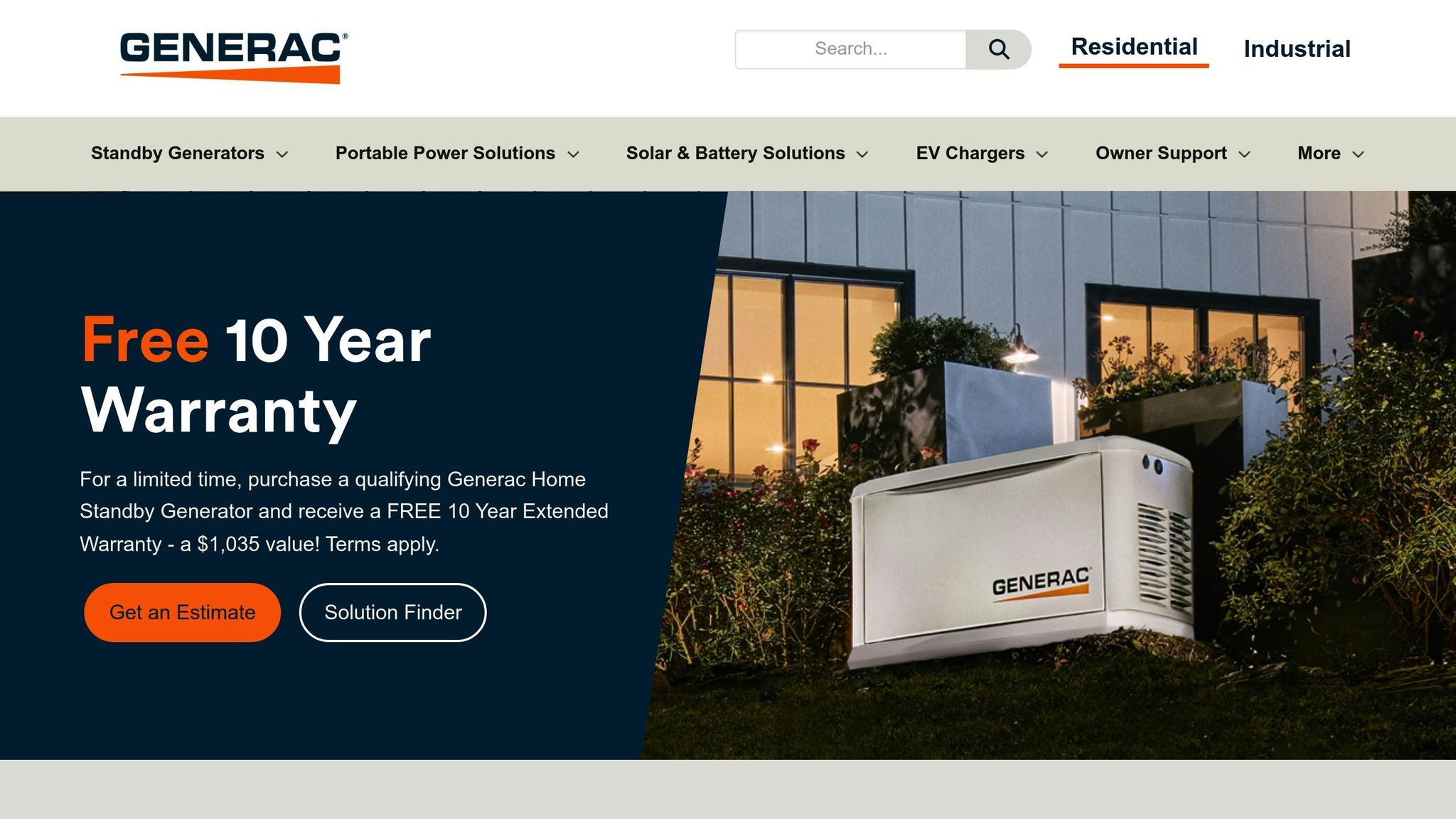
Generac standby generators provide dependable, automatic backup power for homes in Southwest Florida. These permanently installed systems are designed to detect power outages automatically, ensuring that essential systems stay operational without any manual intervention.
Cost Considerations
The cost of installing a Generac standby generator depends on your home’s specific power requirements and the complexity of the installation process. Expenses typically include the generator itself, installation labor, and any necessary updates to your electrical or fuel systems. To get a clear picture, it’s best to consult with professionals who can provide a customized estimate based on your situation.
Performance and Suitability
Generac standby generators are designed to transition smoothly from utility power to backup power during outages. This seamless operation is especially critical during prolonged power losses, offering peace of mind and uninterrupted functionality for your home.
Maintenance and Reliability
To keep your generator running smoothly, regular maintenance is key. Adhering to the manufacturer’s servicing guidelines and scheduling periodic inspections will help ensure the system remains reliable for years to come. Up next, we’ll take a look at portable generators for more flexible, on-demand power solutions.
2. Portable Generators
Portable generators offer a practical, on-demand power solution, standing out as a more adaptable option compared to fixed standby systems. They’re especially useful for Southwest Florida residents looking for versatile emergency power sources.
Cost
As of November 2025, the average price for quality portable generators is approximately $0.40 per watt-hour.
Some noteworthy models include the Jackery Explorer 300 for $279, the Anker Solix C1000 at $999, and the Jackery Explorer 2000 v2, which is available for under $800. To extend usage, you can pair these with a 200-watt solar panel, priced at under $400, allowing for days of operation.
Performance
Today’s portable power stations are highly efficient, often surpassing the industry standard. For instance, the EcoFlow Delta Pro 3 delivers 97% of its listed power capacity, while the Bluetti Elite 200 V2 provides 92% of its rated 2,073.6 watt-hour capacity – well above the typical 85% efficiency seen in most units.
These battery-driven systems are quiet and emission-free, making them an excellent alternative to traditional gas-powered generators. For example, the DJI Power 500 operates at just 25 decibels during recharging – about as quiet as a whisper.
Suitability
Portable power stations are ideal for situations requiring clean and quiet energy. They’re perfect for use during power outages, off-grid trips, or even remote work setups. Many models also feature modular designs, allowing you to expand battery capacity as needed.
For residents of Southwest Florida, these generators can reliably power essential devices during hurricane season, such as medical equipment, communication tools, and small appliances. It’s important to calculate your power needs carefully, as higher-demand devices will require units with larger capacities.
Additionally, most models are compatible with solar panels, enabling off-grid recharging during prolonged outages.
Maintenance
Compared to gas-powered generators, portable power stations require very little upkeep. Most modern units are equipped with LiFePO4 batteries, which are built to last over 3,000 charge cycles – roughly 10 years. This is a significant improvement over older lithium-ion batteries, which typically last 500 cycles or about 3 to 5 years. To extend battery life, avoid frequent ultra-fast charging and shield the units from water and extreme weather conditions.
These systems also come with built-in safety features, such as automatic shutdown, overload protection, and temperature gauges, which help prevent damage and ensure smooth operation. Internal fans kick in automatically to prevent overheating, even during heavy use.
The next section will explore solar battery storage systems as a renewable energy backup option.
3. Solar Battery Storage Systems
Solar battery storage systems provide a reliable backup power solution by capturing and storing solar energy for use during outages. They pair renewable energy generation with efficient storage, offering an alternative to traditional generators while reducing dependency on fossil fuels. This eco-friendly option fits seamlessly alongside other backup power methods.
Cost
For homeowners considering renewable energy options, cost is often a primary factor. Solar battery systems do come with a higher upfront price tag, but they can lead to significant long-term savings by lowering energy bills. Federal incentives and flexible financing plans are available to help offset installation costs, making these systems more accessible. The total cost will depend on factors like the system’s capacity, installation complexity, and the specific energy needs of the household.
Performance
Thanks to advancements in technology, modern solar battery systems are more efficient and reliable than ever. They convert solar energy effectively and use durable charge and discharge systems to ensure steady power delivery. Storage capacities vary across models – some are designed to power essential appliances during an outage, while others can support an entire home. Many systems also feature optimized charging capabilities, making the most of sunny days and allowing for grid recharging when needed.
Suitability
Southwest Florida’s abundant sunshine and frequent severe weather make solar battery storage systems an excellent choice for the region. With plenty of daily sunlight, these systems can generate and store enough energy to keep homes powered during hurricanes or other extreme weather events. They’re particularly useful for households that need uninterrupted power for critical devices, medical equipment, or remote work setups. Many systems also offer modular designs, making it easy to expand energy capacity as needs grow.
Maintenance
One of the standout advantages of solar battery systems is their low maintenance compared to fuel-based generators. Built with advanced battery technology, these systems are designed for long service intervals and often come with warranties to ensure reliable performance. Homeowners can monitor energy production and storage through smartphone apps, while occasional professional inspections help maintain peak efficiency. Unlike gas generators, solar systems don’t require fuel, oil changes, or filter replacements. Maintenance is generally limited to cleaning the solar panels and keeping an eye on battery performance through the management system.
sbb-itb-f7f5bf2
4. APS Naples Services
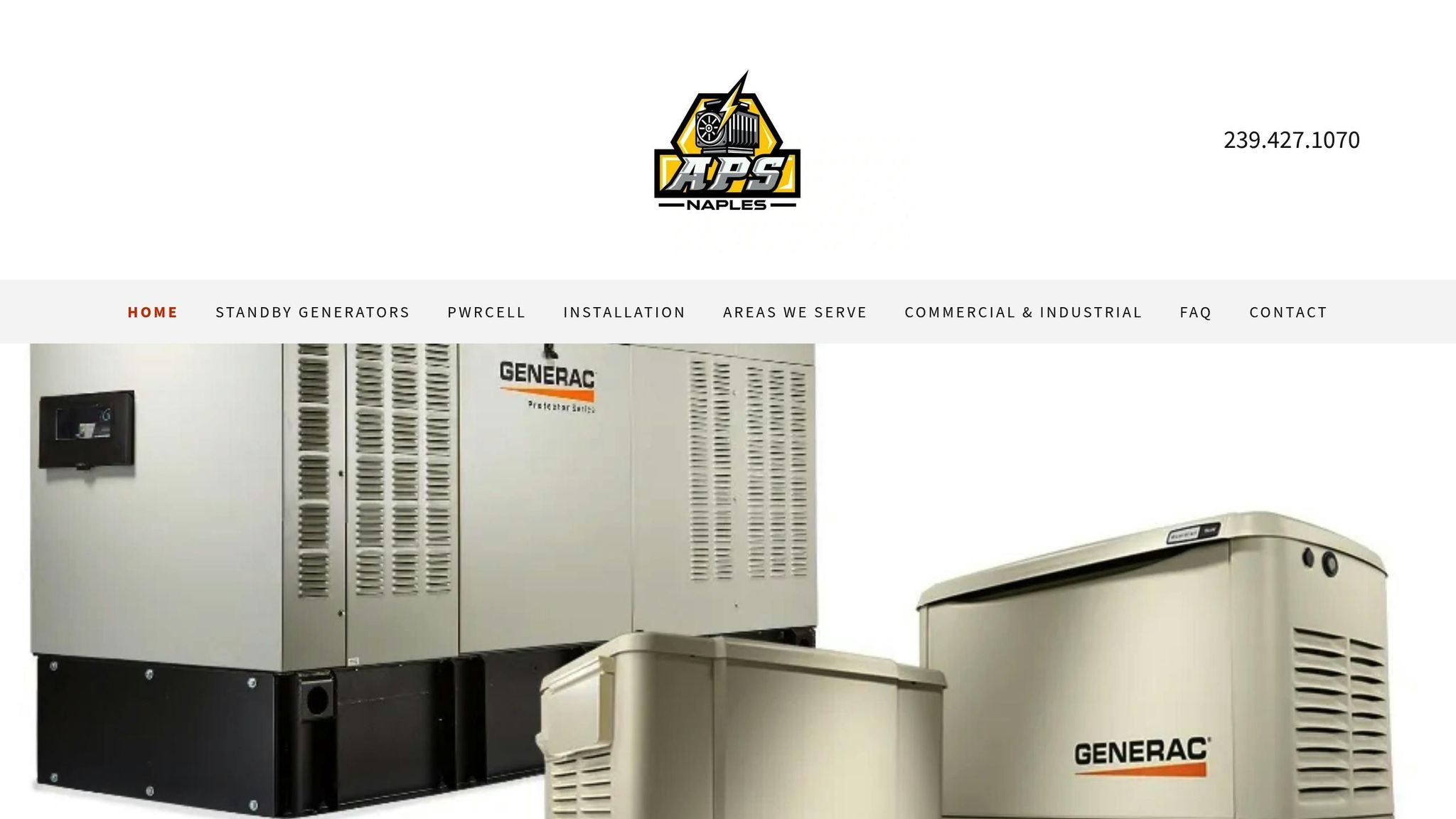
APS Naples specializes in backup power solutions tailored to the unique demands of Southwest Florida’s weather and power reliability issues. They provide installation services for Generac standby generators, EV chargers, and PWRcell battery storage systems for both residential and commercial properties. By offering site surveys, customized sizing, and handling permit processing, APS Naples ensures customers are prepared for storms and power outages. Below is a closer look at their services, pricing, and the benefits they bring to addressing local power challenges.
Cost
APS Naples provides two installation options: Basic and Whole Home Installation packages. These include essential services like site surveys, generator sizing, permit handling, fuel setup, and maintenance plans. For commercial properties, pricing is customized to meet specific business power needs. The packages also cover permit fees and inspection costs, simplifying the process for business owners.
Performance
Their installation process is designed to deliver dependable performance. This includes custom sizing to match power needs, proper fuel setup, and installing necessary infrastructure like concrete pads and smart switches. Each system undergoes thorough testing to ensure reliability, and homeowners are trained on how to operate their equipment. For added convenience, optional remote monitoring allows users to track system performance and maintenance requirements.
Suitability
APS Naples focuses on solutions built to handle Southwest Florida’s extreme weather conditions. Their installations are engineered to provide reliable backup power during severe storms and outages. The PWRcell battery storage systems offer an additional layer of security, serving as a reliable energy reserve for both homes and businesses when the grid goes down.
Maintenance
To keep systems running smoothly, APS Naples offers maintenance plans that include regular inspections, updates, and performance monitoring. These services help extend the life of the equipment and reduce the risk of unexpected failures. Their technicians, who specialize in Generac and PWRcell systems, are available to address issues quickly, ensuring backup power systems are always ready when needed.
Advantages and Disadvantages
When it comes to backup power options, each choice comes with its own perks and challenges. Understanding these trade-offs is key to finding the right fit for your needs in Southwest Florida.
Here’s a breakdown of the pros and cons of each option:
Generac standby generators are designed for automatic operation and can power your entire home during extended outages, which is especially useful during hurricane season. However, they come with a steep initial cost, require professional installation, and need regular maintenance. Additionally, fuel availability can become a concern during widespread outages.
Portable generators are a more budget-friendly option and work well for powering essential appliances during short outages or for recreational purposes. Their flexibility is a plus, but they require manual operation and frequent refueling for longer use. Safe storage and periodic fuel rotation are also necessary to keep them ready when needed.
Solar battery storage systems stand out for being environmentally friendly and reducing electricity costs while providing quiet, backup power. They’re great for running essential circuits for several hours, but they come with a hefty upfront price tag and can be less reliable during prolonged cloudy weather.
APS Naples services simplify the process by handling everything from site surveys and permits to installation and maintenance. Their professional approach ensures the system is correctly sized and installed, giving homeowners peace of mind during storms. This turnkey solution eliminates the hassle of managing installation details but comes with varying costs depending on the system chosen.
| Power Option | Initial Cost | Runtime (varies) | Maintenance | Best For | Main Drawback |
|---|---|---|---|---|---|
| Generac Standby | High upfront cost | Long (fuel-dependent) | Professional service | Whole-home coverage | High cost and complex setup |
| Portable Generator | Affordable | Limited (several hours) | User-operated | Essential appliance backup | Manual setup and frequent refueling |
| Solar Battery | Substantial | Variable (weather-dependent) | Minimal | Eco-conscious homeowners | Weather-dependent performance |
| APS Naples Services | Varies by system | Dependent on solution | Included in service plan | Turnkey solution for all scenarios | Cost varies by system |
*Note: Runtime depends on fuel availability and weather conditions.
These differences can make or break your backup power experience during an outage. For instance, standby generators automatically kick in when the power goes out, while portable generators require manual setup. Solar battery systems provide seamless power for essential circuits but may struggle to handle high-demand appliances. For Southwest Florida residents – especially during hurricane season – automatic systems or professionally installed solutions from APS Naples offer a reliable option. Meanwhile, portable generators remain a practical choice for shorter outages or less critical needs.
Final Recommendations
Choosing the right backup power solution for Southwest Florida’s unpredictable weather comes down to your specific needs, budget, and the level of reliability you’re looking for.
If you’re a homeowner wanting full-home coverage, Generac standby generators are a solid choice. These systems automatically kick in during outages and are built to handle Florida’s tough conditions. While the upfront cost is higher, they provide peace of mind by ensuring uninterrupted power – especially crucial for families relying on medical equipment, home security, or refrigeration during extended outages.
For those working with a smaller budget or dealing with shorter outages, portable generators can be a practical option. These units are great for powering essentials like refrigerators, fans, and charging stations. However, they do require manual setup and ongoing fuel management, which involves more effort on your part.
If reducing your environmental impact is a priority, battery storage systems, especially when paired with solar panels, offer a greener alternative. These systems provide quiet backup power for essential circuits and help lower your carbon footprint. They’re ideal for homes with moderate power needs, though they may be less effective during long stretches of cloudy weather.
Businesses in Southwest Florida face unique challenges during severe weather. For commercial operations, larger standby generators or a combination of systems are often necessary. These solutions help maintain operations, protect inventory, and ensure employee safety during extended outages.
No matter which system you choose, professional installation and maintenance are critical. APS Naples offers expert installation to ensure your system is safe, complies with local codes, and operates seamlessly when you need it most. Proper installation is key to avoiding risks, such as carbon monoxide exposure from gas generators, and ensures your backup power system performs effectively during outages.
APS Naples also provides ongoing maintenance, tailored to Southwest Florida’s specific needs, including hurricane preparedness and compliance with local electrical standards. With their expertise, you can trust your backup system will be ready when it matters most.
Investing in professional installation and maintenance not only protects your system but also ensures reliable performance during any outage.
FAQs
How do I choose between a standby generator and a solar battery storage system for my home in Southwest Florida?
Choosing between a standby generator and a solar battery storage system for your Southwest Florida home involves weighing several important factors. Let’s break it down:
Cost plays a big role. This includes not just the upfront price of the system but also installation and ongoing expenses, like fuel for generators or electricity for charging solar batteries.
Then there are the installation requirements. Generators often need fuel lines and exhaust systems, while solar batteries typically require solar panels and specific wiring setups.
Consider runtime and power capacity. Generators can keep running as long as you have fuel, but solar batteries rely on stored energy and sunshine, which can be limiting during extended cloudy periods.
Noise levels and environmental impact are worth thinking about too. Generators can be loud and release emissions, while solar systems are much quieter and cleaner.
Lastly, look at the safety features. Generators may need carbon monoxide monitoring to prevent dangerous fumes, while solar batteries should have fire-resistant designs.
By evaluating your home’s power needs and Southwest Florida’s unique weather patterns, you can decide which system suits your situation best.
What are the differences in maintenance needs between portable generators and solar battery systems?
When it comes to maintenance, portable generators demand a bit more attention compared to solar battery systems. With portable generators, you’ll need to stay on top of tasks like checking and changing the oil, swapping out air filters, and inspecting spark plugs. These steps are crucial to keep the generator running smoothly, especially if you’re using it frequently or for long stretches during power outages.
Solar battery systems, however, are much easier to manage. Once installed, they only need occasional check-ups to ensure the batteries are working properly and all connections remain secure. Since they don’t have moving parts and run on renewable energy, they tend to last longer and require less upkeep. That said, following the manufacturer’s maintenance recommendations is key to getting the best performance and lifespan out of both systems.
What are the long-term costs of a Generac standby generator compared to a solar battery storage system?
The long-term expenses of a Generac standby generator compared to a solar battery storage system can differ greatly, depending on initial costs, upkeep, and operational expenses.
- Generac Standby Generators: These units generally come with an upfront price tag ranging from $3,000 to $15,000, with installation fees adding another $3,000 to $8,000. Annual maintenance typically costs $300 to $600, while fuel expenses, which vary based on usage, average between $1.50 and $4.00 per hour of operation.
- Solar Battery Storage Systems: For a whole-home setup, the initial cost usually falls between $15,000 and $35,000, with installation fees of $2,000 to $5,000. Maintenance is minimal, costing around $0 to $200 per year. If paired with solar panels, there are no fuel expenses, though electricity from the grid may be required when used as a backup.
While Generac generators come with a lower upfront cost, solar battery systems have reduced ongoing expenses and provide greater energy independence, making them a more appealing option for those thinking long-term.