

Standby generators are permanent backup power systems that automatically supply electricity during outages. Unlike portable generators, they connect directly to your home’s electrical system and run on natural gas or propane, ensuring uninterrupted power. These systems are especially useful in areas like Southwest Florida, where hurricanes and frequent storms often cause extended outages. Key benefits include:
- Automatic operation: Restores power within seconds during an outage.
- Fuel options: Natural gas (continuous supply) or propane (on-site tanks).
- Reliability: Keeps essential appliances, security systems, and medical devices running.
- Increased property value: Adds up to 150% of the generator’s cost to home value.
Installation involves site assessment, permits, fuel line setup, and electrical connections, typically costing $8,000–$16,000. Proper maintenance, including oil changes, battery checks, and annual load testing, ensures a lifespan of 15–20 years. APS Naples specializes in installing and maintaining Generac generators tailored to Florida‘s unique weather and regulatory needs. They offer full-service solutions, including remote monitoring and detailed maintenance plans, to keep your generator ready when it matters most.
Standby Generator Questions Answered (FAQs)
How Standby Generators Work
Standby generators provide reliable power during outages, thanks to a sophisticated control system that ensures a seamless transition when the electricity goes out. Here’s how they operate.
Automatic Operation and Transfer Switch
The Automatic Transfer Switch (ATS) is the brain of a standby generator system. Its primary job is to monitor the voltage coming from your utility provider. When it detects a power outage or a significant voltage drop, the ATS instantly signals the generator to start up. Within 10–30 seconds, the generator’s engine reaches its operating speed, quickly restoring power and minimizing disruption.
The ATS also plays a critical safety role. Once the generator is up and running, it disconnects your home from the utility grid and transfers the electrical load to the generator. This prevents electricity from flowing back into utility lines, which could endanger utility workers. When the utility power is restored and remains stable for a specific period – usually 30 seconds to a few minutes – the ATS switches the load back to the utility supply.
Fuel Sources: Natural Gas and Propane
Standby generators are typically powered by natural gas or propane, and the choice depends on your property’s setup and power requirements.
- Natural Gas: This option is ideal if your home is already connected to a natural gas line. It provides a continuous fuel supply, eliminating the need for refueling.
- Propane: For homes without access to natural gas, propane is a reliable alternative. It’s stored in on-site tanks, offering flexibility for properties in remote areas.
Both fuel types integrate seamlessly with the generator’s automatic system. When the ATS signals the generator to start, the fuel system immediately supplies energy to the engine. The engine then powers an alternator, which generates the electricity needed to keep your home running smoothly.
Benefits of Installing a Standby Generator
As mentioned earlier, the automatic startup of standby generators ensures immediate power restoration, making them a critical asset in Southwest Florida’s unpredictable weather. These systems do more than just provide backup electricity – they offer protection for your property, safeguard your health, and bring peace of mind.
Reliable Power During Storms and Outages
Standby generators deliver consistent power during severe weather events. Whether it’s a hurricane, tropical storm, or an unexpected outage, these systems kick in instantly, keeping your home or business powered even in the worst conditions.
This reliability ensures that vital appliances and systems stay operational. For households with electronic medical devices, a generator can literally be a lifesaver. Beyond medical needs, they also shield your expensive electronics from power surges. By disconnecting your property from utility lines during outages, generators help prevent damage when power is restored.
For practical use, a 22 kW generator paired with a 500-gallon propane tank can power a home for 6–8 days under moderate loads. If connected to a natural gas line, the runtime becomes virtually unlimited as long as the supply remains intact. With load-shedding technology, these systems prioritize critical functions, ensuring efficiency and reliability.
In addition to keeping essentials running, standby generators enhance safety and provide seamless operational continuity during emergencies.
Peace of Mind for Homeowners and Businesses
The advantages of standby generators go far beyond just keeping the lights on. One major benefit is maintaining safety and security. Generators ensure that home security systems, alarms, cameras, and outdoor lighting remain active during blackouts, helping to deter potential intruders.
For those working remotely, a generator is a game-changer. It keeps internet connections, computers, and communication tools running smoothly, preventing interruptions that could disrupt work or income. Businesses also benefit from avoiding revenue losses caused by shutdowns, and homeowners can prevent food spoilage during extended outages.
In Florida’s hot and humid climate, the comfort provided by standby generators is invaluable. They keep HVAC systems running, ensure hot water is available, and allow everyday tasks like laundry to continue uninterrupted, even during long power failures.
There’s also a financial upside. A whole-home generator can increase a property’s value by up to 150%, making it more appealing to potential buyers.
Modern standby generators are built to handle Florida’s tough coastal conditions. With weather-resistant designs, they stand up to extreme heat, humidity, and storms. Best of all, their automatic operation means you won’t have to worry about manual setup during challenging weather.
Installation Process: What to Expect
Installing a standby generator involves several carefully planned steps to ensure your property is equipped for reliable backup power. Here’s a breakdown of what you can expect during the installation process.
Steps in the Installation Process
The process kicks off with a 2–4 hour consultation and site assessment. During this visit, technicians will assess your power needs, determine the right generator size, and identify the best location for installation. They’ll also review your electrical panel and discuss fuel options.
Next comes obtaining permits, which includes securing local approvals like an electrical trade permit, a fuel gas permit, and a Notice of Commencement. Permit approval can take anywhere from 2 days to 2 weeks, depending on your local jurisdiction.
A digitally signed and sealed site plan is also required. This document, prepared by a Florida Licensed Surveyor and Mapper, a design professional, or a contractor, must outline key details like setback dimensions, easements, zoning districts, and flood hazard areas where applicable.
Once permits are secured, site preparation begins. This involves clearing debris, leveling the ground, and installing a stable foundation. A concrete pad is typically used to provide a solid base for the generator.
The next step is fuel line installation, which connects the generator to its power source – either natural gas or propane. This critical step must be handled by certified professionals to ensure safety and compliance with local codes.
During the electrical wiring phase, the generator is connected to your home’s electrical system. An automatic transfer switch is installed near your main panel to manage power flow seamlessly during outages.
Generator delivery times can vary. For Generac models, delivery typically takes 4–8 weeks. Once the generator arrives, the installation itself usually takes 1–2 days, with the entire process wrapping up in 1–3 weeks.
Finally, final testing ensures the system is working correctly. Technicians simulate a power outage to confirm functionality and provide hands-on training so you’re comfortable operating your new generator.
| Installation Complexity | Timeline | Scenario Example |
|---|---|---|
| Simple Installation | 1 week | Small 7kW unit, single-story home, natural gas hookup |
| Medium Complexity | 3–4 weeks | 22kW unit, two-story home, propane tank installation |
| High Complexity | 6–8 weeks | Custom home, unique mounting, 500-gallon propane tank |
These steps ensure your generator is fully operational and ready to provide uninterrupted power when needed.
APS Naples Installation Services
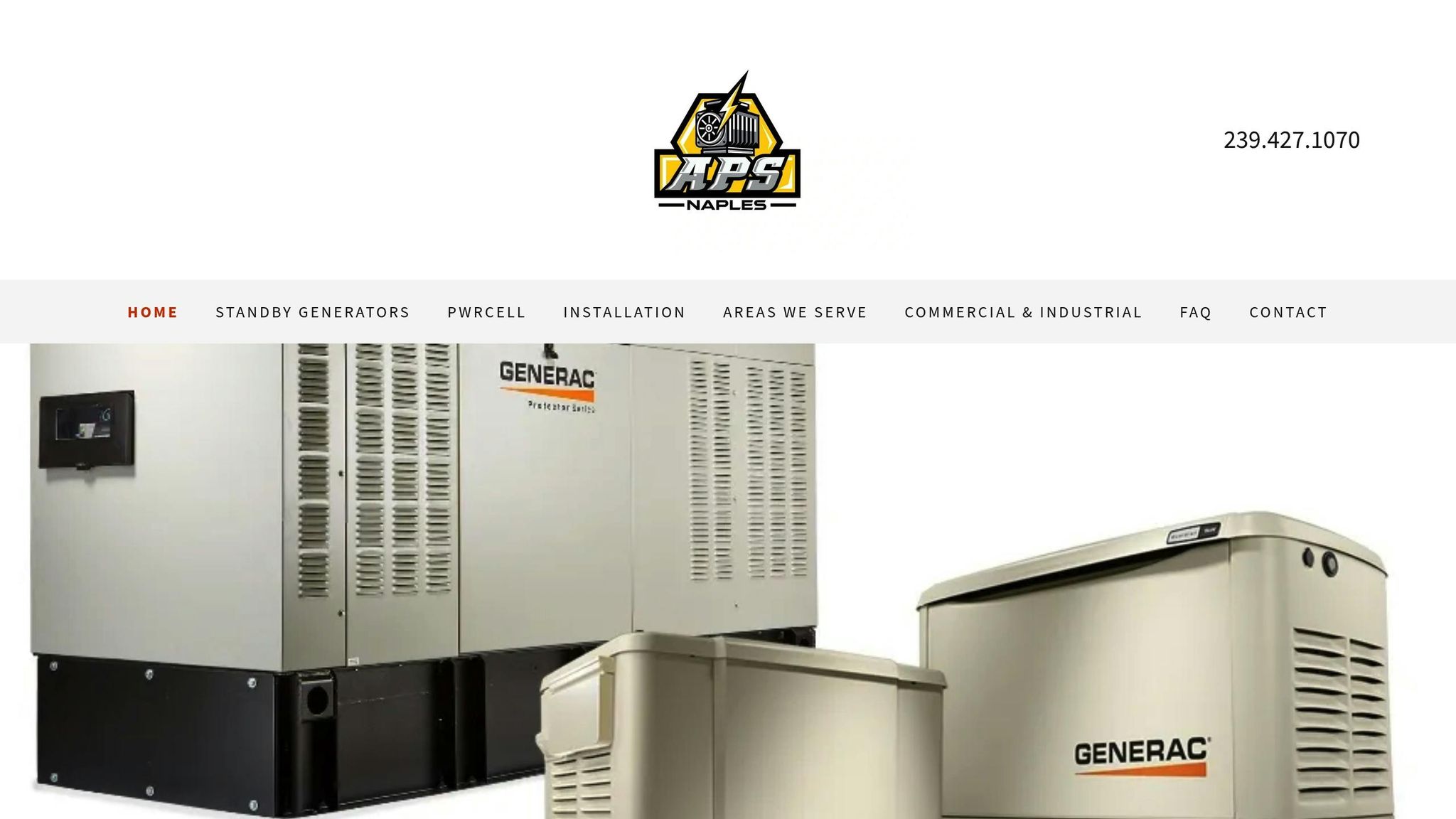
APS Naples takes the stress out of generator installation by managing the entire process from start to finish. From the initial consultation to final testing, their expert team handles every phase, including permitting and inspections, ensuring compliance with local regulations and flood zone requirements.
Their services include site preparation, fuel line installation, and electrical wiring. They also tailor the generator’s size to your specific needs, whether you’re looking to power essential systems or your entire home.
The total cost for installation typically ranges between $8,000 and $16,000. This price includes the generator, transfer switch, all required materials, and permitting. APS Naples concludes the process with thorough system testing and homeowner training, giving you the confidence to maintain and operate your new power system.
For quicker turnaround times, consider scheduling your installation during off-peak seasons.
sbb-itb-f7f5bf2
Maintenance and Longevity of Standby Generators
Keeping up with maintenance is the key to ensuring your standby generator delivers reliable power for years to come. With proper care, most standby generators can run efficiently for 15 to 20 years, making them a smart long-term investment for homeowners and businesses in Southwest Florida.
Routine Maintenance Tasks
Routine upkeep is essential for keeping your generator performing at its best. One of the most important tasks is regular oil changes, which should be done every 100 to 200 hours of operation or at least once a year – whichever comes first. In Florida’s humid climate, sticking to this schedule is especially important, as moisture can degrade oil quality over time.
Battery maintenance is another critical step. Check the generator’s battery every three months to ensure it powers the control system and automatic start without issues. Clean the terminals and secure the connections since most generator batteries last about 3 to 5 years before needing replacement.
Inspect the air filter every six months. Dust, debris, and sand – common in Florida’s stormy and sandy conditions – can clog the filter, forcing the engine to work harder and reducing its efficiency.
Coolant levels should be checked monthly, and hoses inspected for any signs of leaks. This is particularly important during Florida’s sweltering summers, as low coolant levels can lead to overheating when the generator is running at full capacity.
Running weekly exercise cycles is another must. These short runs, typically lasting 15 to 20 minutes, keep internal parts lubricated and help prevent issues with the fuel system. Many modern generators handle this automatically, but it’s a good idea to confirm the cycle is running as expected and listen for any unusual noises.
Fuel system maintenance depends on the type of fuel your generator uses. Natural gas systems usually require annual inspections of connections and regulators, while propane systems benefit from periodic checks of pressure and valves. To maintain fuel quality during extended periods of inactivity, consider using fuel stabilizers.
Annual load testing is also vital. This process involves running the generator under full load conditions to confirm it can handle its maximum capacity. Load testing can also reveal problems with components like transfer switches, electrical connections, or the engine before they cause major issues during a power outage.
For a worry-free experience, professional maintenance services – like those offered by APS Naples – can ensure these tasks are performed regularly and correctly.
APS Naples Maintenance Plans
APS Naples provides a range of maintenance services to keep your generator running smoothly year-round. Their plans include scheduled inspections, oil changes, filter replacements, and system diagnostics, all carried out by certified technicians who understand the unique environmental challenges of Southwest Florida.
One standout feature of their plans is remote monitoring. This technology keeps an eye on your generator 24/7, alerting APS Naples to potential problems before they escalate. During scheduled visits, technicians perform comprehensive system checks, examining everything from electrical connections and fuel lines to coolant levels and battery health. They’ll also make any necessary updates to keep your generator in peak condition.
APS Naples goes a step further by maintaining detailed service records for every generator they manage. These records track the maintenance history and can identify patterns that might signal future service needs. This proactive approach not only extends the life of your generator but also ensures compliance with manufacturer warranties, which often require documented annual service by certified professionals. APS Naples provides all necessary documentation for warranty and insurance purposes.
Another key part of their maintenance plan is annual load testing. This test ensures your generator can handle your home or business’s full electrical demand while identifying any issues before they become critical during a power outage.
Investing in regular professional maintenance through APS Naples is a reliable way to ensure your standby generator operates efficiently and lasts for years to come.
Cost Considerations and Fuel Comparisons
Once you’ve planned the installation, the next step is understanding the costs and fuel options involved. These factors play a big role in choosing the right standby generator for your needs.
When budgeting, keep in mind that the total cost of a generator goes beyond just the price of the equipment. It includes installation, permits, fuel connections, and ongoing operating expenses. Carefully evaluating these elements ensures your backup power solution fits both your needs and your budget.
Upfront Costs and Installation Expenses
The price of a standby generator varies depending on its size and the specific requirements of your property. Smaller units designed to power only essential systems are generally less expensive than larger models that can support your entire home. Installation costs typically include:
- Installing a transfer switch
- Connecting the generator to your home’s electrical panel
- Preparing a concrete pad for the unit
- Setting up fuel connections
Permit fees also depend on your local municipality. Other factors to consider include the distance between your generator and your electrical panel, the setup for fuel lines (whether connecting to an existing natural gas line or installing a propane tank), and any additional site preparation. Some installers provide financing options to help spread out the costs. While the upfront investment may seem significant, the long-term benefits of reliable backup power can make it worthwhile.
Natural Gas vs. Propane: Pros and Cons
Your choice of fuel – natural gas or propane – affects both the installation process and the generator’s ongoing operation. Here’s a comparison of the two options:
| Factor | Natural Gas | Propane |
|---|---|---|
| Fuel Cost | Generally more affordable | Typically more expensive |
| Availability | Requires an existing gas line | Delivered directly to your property |
| Refueling | Continuous supply from utility | Periodic tank refills needed |
| Storage | No on-site storage required | Requires an on-site tank |
| Cold Weather Performance | Reliable in most conditions | May vary in extreme cold |
| Installation Complexity | Easier with existing gas service | More complex due to tank setup |
| Environmental Impact | Lower carbon footprint | Higher carbon footprint |
Natural gas offers the convenience of an uninterrupted fuel supply through your utility provider, which simplifies operation and can reduce long-term costs. However, natural gas isn’t available everywhere in Southwest Florida, which could limit its feasibility. Propane, on the other hand, is a flexible alternative for areas without natural gas service. It does require an on-site tank and periodic refueling, but it ensures you have access to backup power even in remote locations.
The decision between natural gas and propane ultimately depends on your local fuel availability and specific installation needs. APS Naples can help you evaluate your options and recommend the best solution for your property.
Why Choose APS Naples for Standby Generators
Standby generators bring peace of mind to Southwest Florida residents, especially during the unpredictable weather seasons. From the chaos of hurricane-force winds to sudden power grid failures, these systems ensure your home or business stays powered when it matters most. And it’s not just about keeping the lights on – standby generators safeguard your food, medications, security systems, and overall comfort during extended outages.
That said, the reliability of your generator depends heavily on proper installation and consistent maintenance. A poorly installed system can lead to failures, safety hazards, and even voided warranties. Likewise, skipping regular maintenance can result in expensive repairs or a complete breakdown when you need the generator most.
This is where APS Naples steps in. Specializing in Generac standby generators, they provide top-tier solutions tailored for Southwest Florida communities. Their installation process is meticulous, ensuring clean wiring and seamless integration with your home’s electrical panel to guarantee your system works flawlessly when called upon.
What sets APS Naples apart is their deep understanding of Southwest Florida’s unique conditions. Coastal humidity, local permitting requirements, and the specific power needs of homes and businesses in the area are all factors they consider. Their local expertise ensures your generator is correctly sized, positioned, and prepared to handle the region’s climate challenges.
In addition to expert installations, APS Naples offers maintenance plans designed to keep your generator dependable year after year. Their services include regular inspections, system updates, and even optional remote monitoring to catch potential issues before they escalate. With technicians who know Generac systems inside and out, you can trust your generator is in capable hands.
FAQs
What should I consider when deciding between natural gas and propane for my standby generator?
When deciding between natural gas and propane for your standby generator, a few important factors come into play. If your home is already connected to a natural gas line, this option is often more convenient. It provides a continuous fuel supply, so there’s no need to worry about refueling.
Propane, on the other hand, is stored in a tank on your property, making it an excellent choice for homes without access to natural gas. Plus, propane tanks can be sized to handle extended outages, giving you greater flexibility if you expect longer periods without power.
To make the best choice, think about the availability of each fuel in your area, the installation costs, ongoing fuel expenses, and how long you anticipate needing the generator during an outage. Both natural gas and propane are reliable options, so your decision should align with your energy needs and the resources available in your location.
How does proper installation impact the performance and reliability of a standby generator?
The installation process of a standby generator is a key factor in determining how well it performs and how reliable it remains over time. When handled by professionals, you can trust that the generator will be properly sized to meet your energy demands, adhere to safety regulations, and be prepared to withstand local weather conditions.
On the other hand, poor installation can lead to problems like reduced efficiency, safety hazards, or even breakdowns during critical power outages. Choosing skilled professionals for the job ensures your generator runs smoothly when it matters most, giving you reliable power and peace of mind for your home or business.
What maintenance is needed to keep a standby generator running efficiently in Southwest Florida’s humid climate?
Regular maintenance is crucial to keep your standby generator running smoothly, especially in Southwest Florida’s humid climate. Key upkeep tasks include changing the oil and filters, swapping out the fuel filter, and checking the generator for any signs of wear or damage. Additionally, it’s wise to test the transfer switch regularly and monitor fluid levels, such as oil and coolant, to ensure optimal performance.
Sticking to this routine not only helps extend your generator’s lifespan but also guarantees it’s ready to deliver power when you need it the most.